AI Can Unlock Limitless Creative Freedom
By Jerald Council, CouncilMag.com
Since the beginning of time, visual storytellers have aspired to push the boundaries of their imagination, but their efforts were often constrained by time, functionality or conceptual limitations. Today, advances in AI technology have unleashed unimaginable creative possibilities. It’s as if any creative idea can now be realized. However, there’s still that lingering question that media companies must confront: What are the rules and guidelines governing the use of AI?
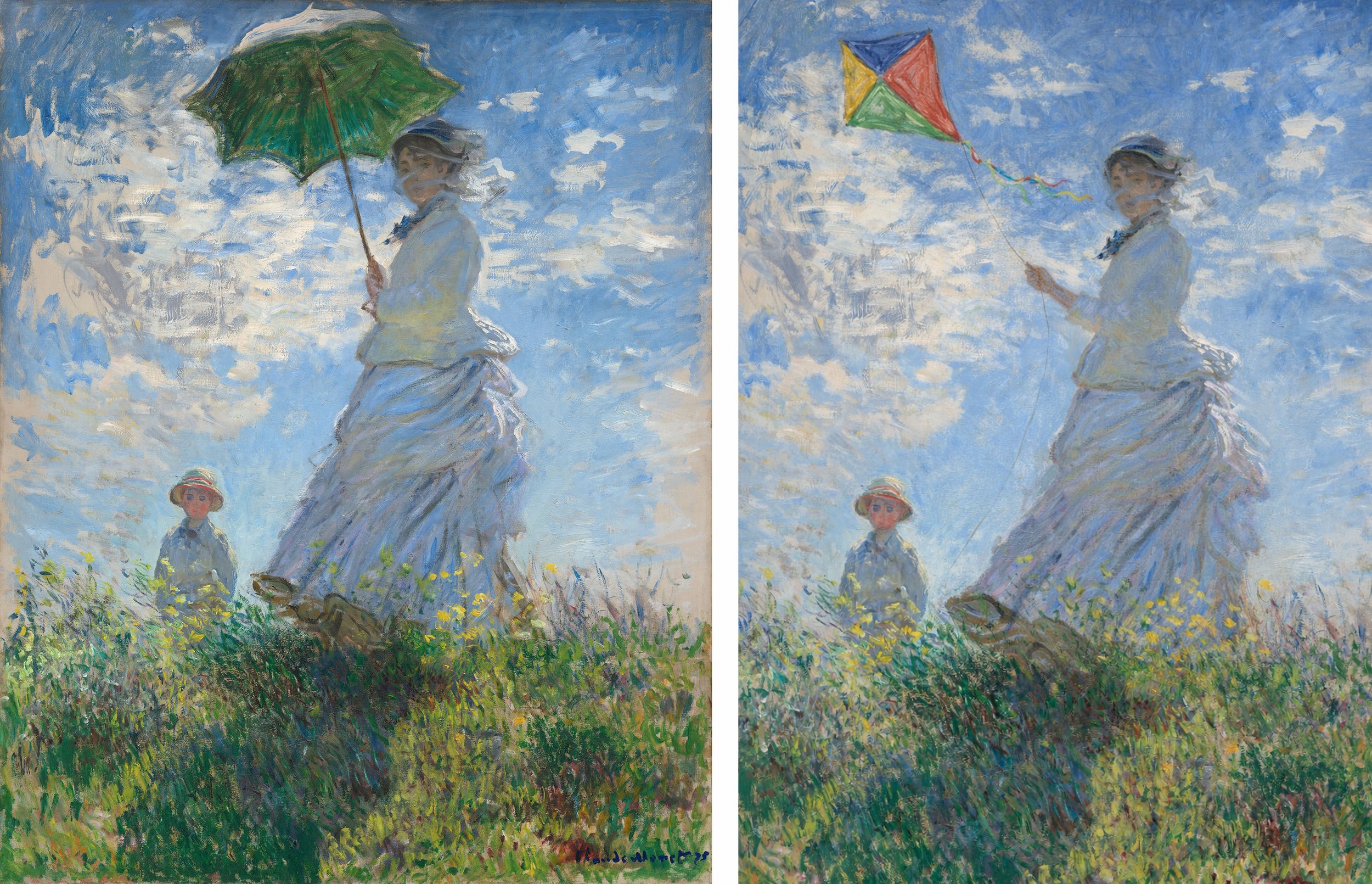
On the right: AI-generated artwork inspired by Claude Monet’s “Madame Monet and Her Son,” depicting a scene of a kite being flown.
Washington, D.C., is home to some of the world’s most famous artworks, especially at the National Gallery of Art. The museum features more than 60,000 public-domain images freely accessible through open access. I decided to use ChatGPT, a well-known generative AI (GenAI) tool, to create a few new “masterpieces” from that collection.
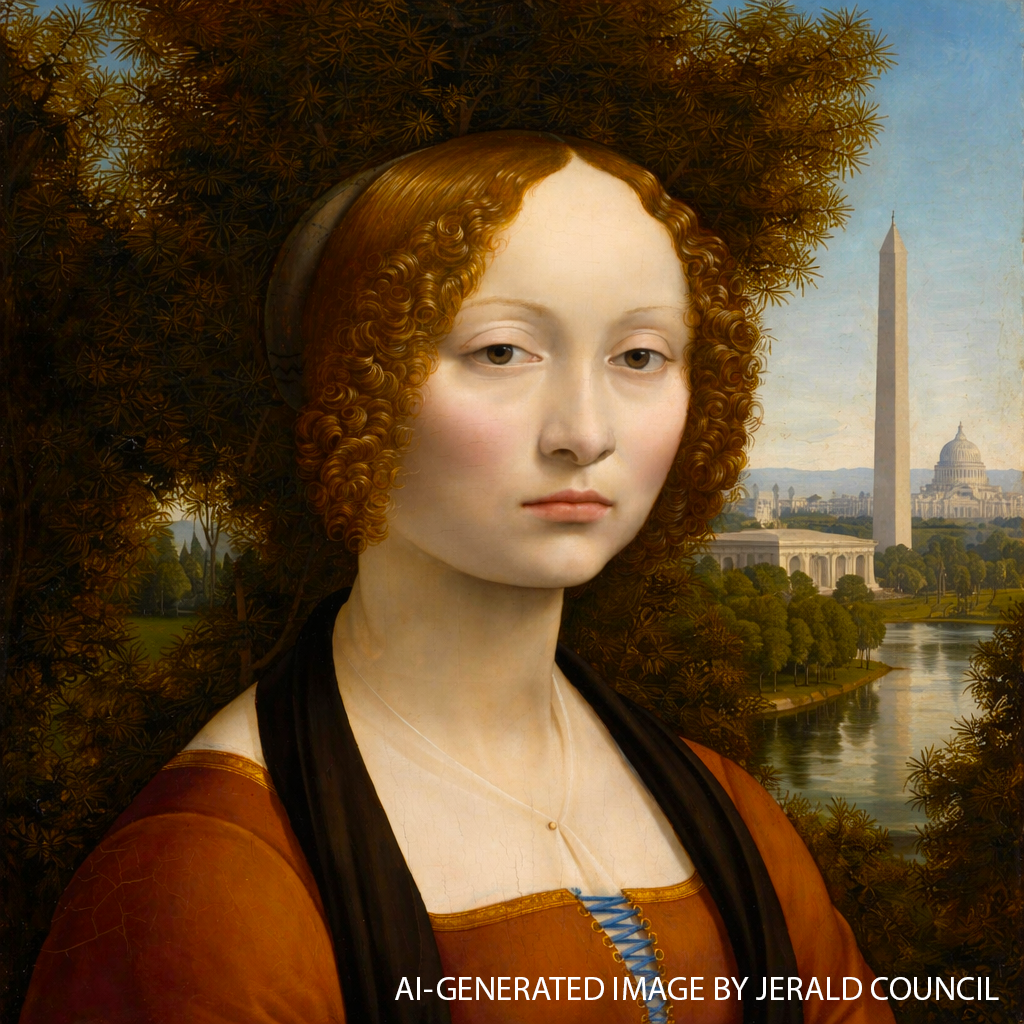
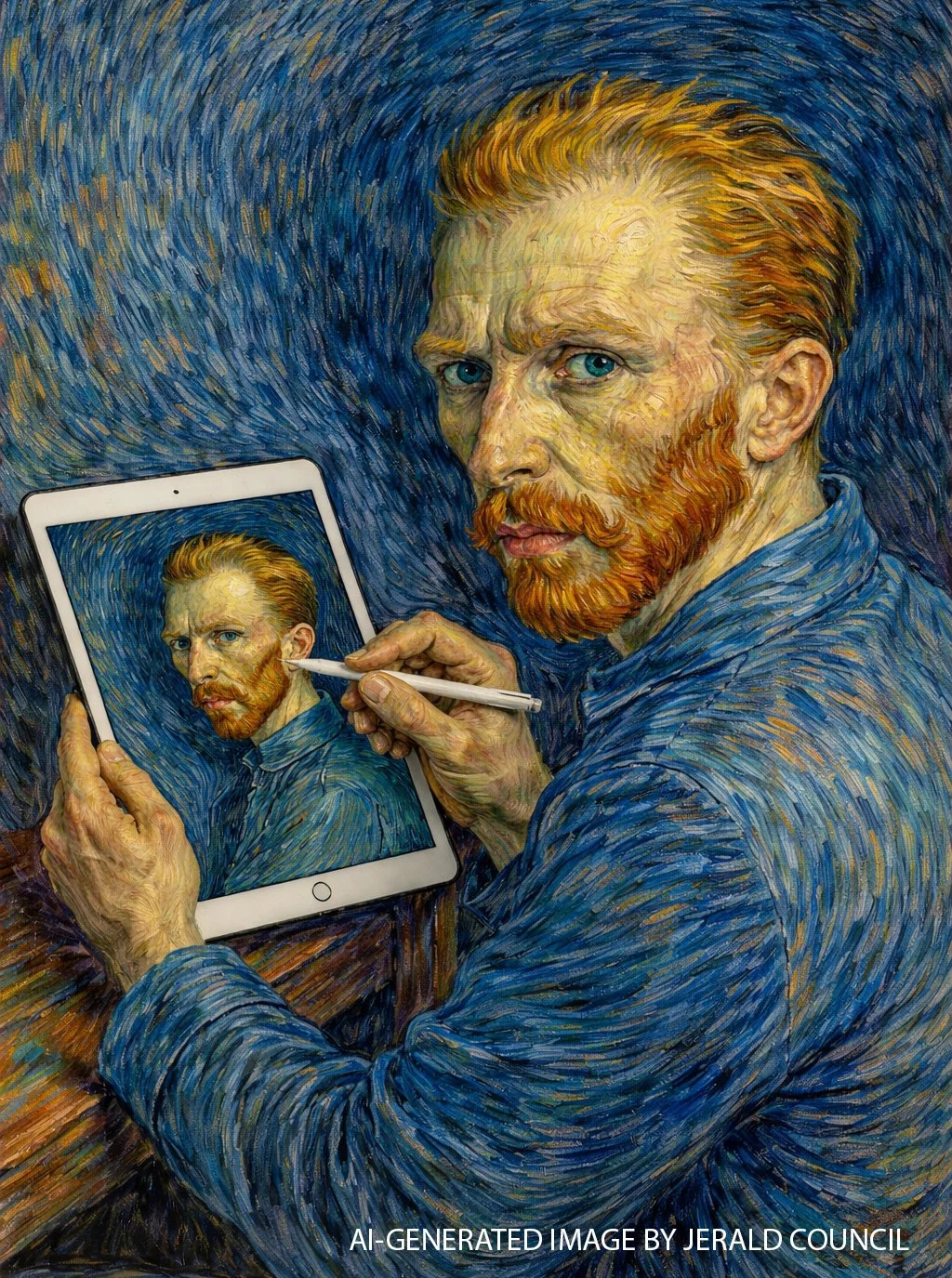
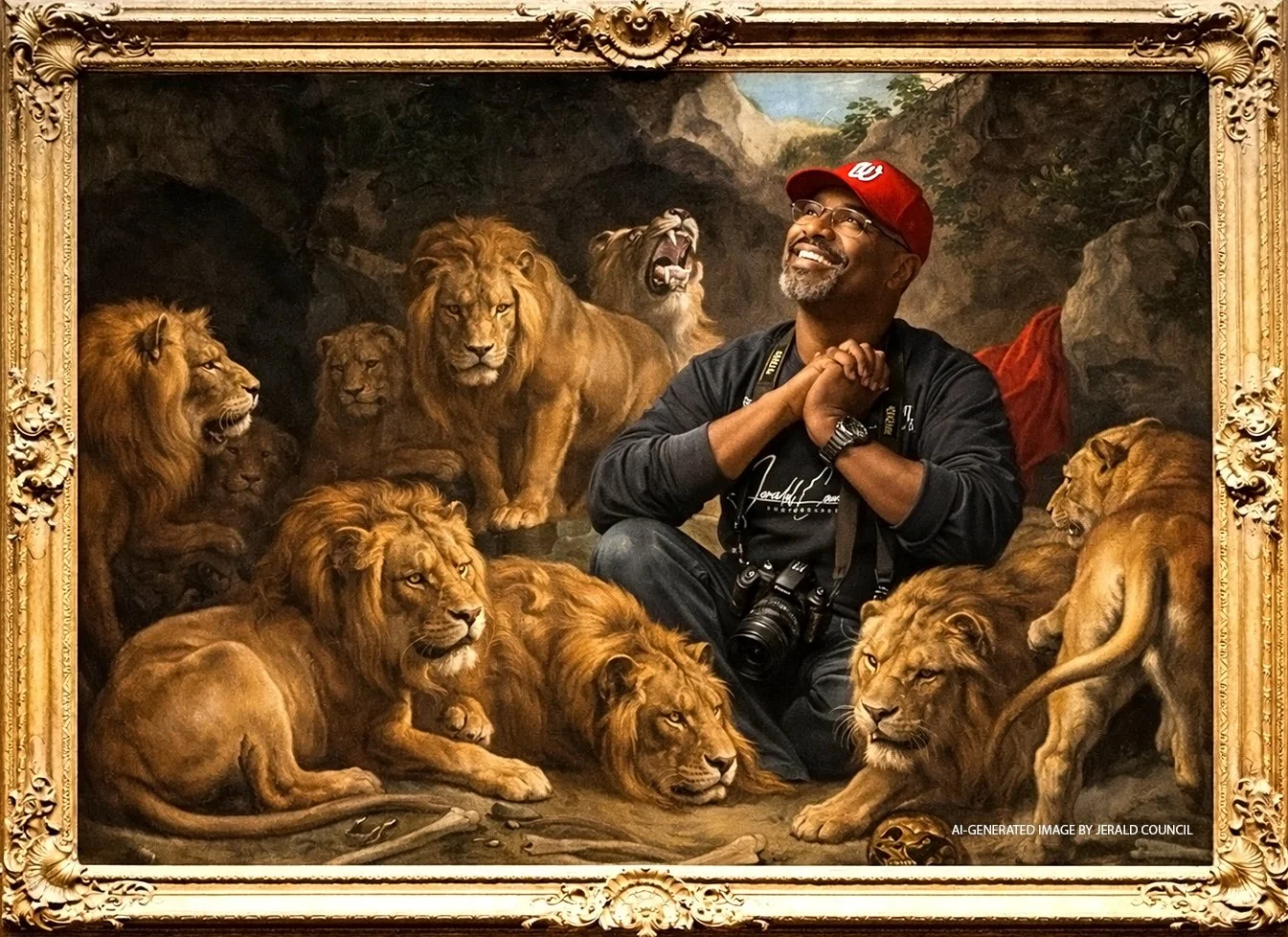
Above, Leonardo da Vinci’s portrait of Ginevra de’ Benci is set against the background of Washington, D.C. Vincent van Gogh’s self-portrait is reimagined with him creating a self-portrait on an Apple iPad using a stylized pencil. These were created in about 5 minutes, including the time it took to come up with the idea.
““I fully support visual storytellers utilizing AI tools. Technology is a helpful resource in our work.””
AI can generate many ideas within defined limits, boosting creative potential. When visual storytellers and AI technology come together, they craft compelling experiences that capture and inspire audiences. Collaboration between a creative thinker and technology fosters innovation with each and every project.
When it comes to using AI for fact-based content, it’s important to have clear rules that explain when and how AI-generated content can be used. These guidelines not only ensure transparency for readers, but also help protect companies from potential legal issues.
I fully support visual storytellers utilizing AI tools. Technology is a helpful resource in our work. Creators who leverage it effectively will be at the forefront of the next wave of professionals. Those who don’t may miss out on opportunities. I value creative thinkers and encourage them to extend their knowledge of AI tools.
Most creators today use multiple tools, not just one. The below AI tools cover 90% of creative workflows, according to various sources:
• General AI (ChatGPT / Claude)
• Visual Tool (Midjourney / Firefly)
• Media Tool (Runway / Suno)
Here are some details about these tools:
• ChatGPT (OpenAI): Widely considered the “creativity king” for brainstorming, writing and coding. It is highly versatile, supporting text, image and audio generation.
• Claude (Anthropic): Renowned for its superior, natural writing style and “Artifacts” feature for real-time interaction with generated content, code or documents. It excels at long-form content and analyzing large documents.
• Midjourney: Known for producing high-quality, artistic and painterly images. It is a favorite for concept art and visual design.
• Adobe Firefly: Deeply integrated into Photoshop and Illustrator, this tool is favored for its commercial safety and ability to edit existing images (“Generative Fill”).
• Runway Gen-3 Alpha: A leader in video generation that allows users to create, edit and animate videos from text prompts.
Visual leaders must recognize and adapt to the faster workflow and economic shifts that AI will bring to traditional design. As AI technology advances, existing guidelines will shift, ushering in a new era of creative leadership and pioneering innovative visual storytelling. Those who accept and embrace these changes will succeed and emerge as the leaders among leaders in this competitive landscape.